Notarial Services for Individuals
I offer a wide range of notarial services to personal clients across the Cotswolds

There are a number of different types of notarial acts that a Notary Public authorised to practise in all parts of England and Wales can draft.
It is sometimes a requirement when undertaking a notarial act that a direct notarial certificate is included, which accompanies the legal documentation to confirm the validity and authenticity of an act or a transaction. This certificate is dated and signed by me, and my personal seal is embossed and my stamp is affixed.
The certificate demonstrates to a recipient in a foreign jurisdiction that a notary public has verified the capacity and identity of the signatory. The purpose is to provide authentication in the form of documentary evidence to the recipient in a foreign jurisdiction.
The certificate is attached to relevant documents that are required to be used abroad.
It is a formal statement made and signed in the presence of me, a notary public. An individual who makes the statement affirms that something is true, to the best of their knowledge. The statement must be truthful and accurate.
The purpose is to satisfy a legal requirement or regulation when there is no evidence available. The individual makes the declaration before a notary public, a different legal professional to the one that has been instructed to deal with a legal matter or process. This ensures impartiality of the statement made.
If you are intending to sell, or wish to purchase, a property overseas you may require a representative in the foreign jurisdiction, where the property is located, to assist you with the sale or purchase. In such circumstances a power of attorney would be required.
A general power of attorney provides legal permission to another person, known as the ‘attorney’, to make decisions and sign documentation on your behalf. A power of attorney is governed by the law of the country where the actions of the ‘attorney’ will be performed. Usually it is the where the property of the donor (the person who creates the power of attorney) is located.
A lawyer in the overseas country drafts the power of attorney, which then needs to be signed by the donor in the presence of me, a notary public.
My role is to check the client understanding of the document and has the requisite capacity /authority to sign. It is usually a requirement that the power of attorney is sent to the Foreign Commonwealth and Development Office for an apostille. I can assist with arranging this, if you wish.
To take an oath, before me a notary public, you will make a verbal statement of fact with wording on a holy book or scripture. Please advise me in advance of our meeting of your preferred holy book or scripture. You may bring your own copy of something considered sacred to the meeting. An affirmation is a verbal statement of fact made without a holy book or scripture. You can choose to take an oath or make an affirmation. Circumstances when you can be required to take an oath or make an affirmation is when verifying a written statement of fact. Oaths and affirmations have the same standing in legal terms.
A Jurat will be completed be me after you have signed the document in my presence, and the date and place of execution will be inserted.
Travel consent documents are a requirement when a child is travelling without one or both parents or legal guardians.
Types of travel forms for minors are:
Parental Consent Forms: signed by parents or legal guardians to grant permission for a child to travel.
Affidavits of Consent: this is a notarised affidavit – a sworn statement – consenting to a child’s travel.
Unaccompanied Minor Forms: some airlines stipulate that when a minor is flying alone then a specific airline form must be notarised.
Grandparent Travel Permission Letters: When a grandparent is accompanying a grandchild, a notarised travel permission letter is signed by the parents giving their consent.
UK Border Agency
A letter of consent to travel will need to be presented at the UK border agency when a child (under 18 years old) travels abroad with an adult that is not a parent.
This letter gives written authority by the parents for another adult to accompany and travel with the child overseas.
The letter of consent, together with any supporting accompanying documentation, such as birth / adoption certificate or marriage / divorce certificate, will help facilitate the travel process.
The UK border agency has a legal obligation to safeguard and promote the welfare of children, and therefore it has a right to investigate matters to establish why an adult, who is not a parent, is travelling with a child.
Travel consent letter
Notarisation of the letter of consent by a notary public certifies that I, a notary public, have verified the identity and signature of the legal parents who have given their consent. The receiving jurisdiction and / or Border Control staff can trust this as proof of evidence that consent to travel has been granted.
Medical treatment
I will check to ensure that a clause is included re. medical treatment to be administered in an emergency situation – this is often added, if not already included, in a travel consent form.
Birth Certificate and Passports
I will require disclosure of the minor’s birth certificate, the minor’s passport and both parents passports, so I can verify the names of the parents and the child, to ensure all persons are identified.
When the parents meet with me to sign in my presence, I will examine their passports under UV light and take a copy for my file records.
I can certify a document as a true copy of the original. I do this by taking a copy of the original document, inserting the date and writing ‘certified to be a true copy of the original seen by me’. My profession, name, signature, address and telephone number is added. The following documents can be certified: passports, driving licences, bank statements, utility bills, medical letters from a hospital or doctor, degree certificates*.
* Please note: verification checks of the document presented must be completed before a certified copy is made.
It is often a requirement if applying for a job overseas that the recruitment agent or foreign employer will require verification of your degree credentials by a notary public. This is something that I can assist with by undertaking my own verification with the university that awarded the degree, attaching my notarial certificate and, if you so wish, then arranging an apostille.
Births, deaths and marriages are legally recorded events. Official copies of these UK documents can be obtained from the General Registry Office website. If required then I can attached my notarial certificate attached to the Official Copy Birth, Death or Marriage Certificate.
If an Apostille is required for use in a foreign jurisdiction, then I can also assist with obtaining an Apostille from the Foreign Commonwealth and Development Office. This process is known as legalisation.
I am an authorised person that can administer affidavits.
An affidavit is a written statement that is sworn before me a notary public. A jurat is added to the end of the affidavit, which states when, where, and before whom the oath was sworn or affirmation was made. In foreign legal proceedings it is common for an affidavit to be used as the principle means by which evidence is put before a court or tribunal.
Documentation required for use in the United States of America often requires verification by a notary public.
An English notary is quite different to an American notary, and the fees for undertaking English notarial services are higher than the fee charged by an American notary.
The type of American documents that need to be notarised in England include:
quit claim and warranty deeds;
affidavits;
(durable) power of attorney;
letters of authorization and consent;
property transfers and mortgages; and
passport for a minor D2-3053 statement of consent.
I cannot notarise American issued certificates or diplomas, because these must be done in the state where it was issued.
Sometimes an Apostille will be required, but this varies from state to state. Usually if the document pertains to a land or trust transaction, then an Apostille may be required. It is best to always makes enquires with the American lawyer to find out whether this is a requirement.
Typically, the following states will require an Apostille:
California;
New York;
Colorado;
Hawaii;
Delaware.
Do please check first with the foreign legal adviser or the instructing private institutions, such as a bank, as to whether an Apostille is required.
If witnesses are required, it is important to get instructions as to how many witnesses must be present.
Acknowledgements must be amended, so rather than ‘state’ the wording is changed to the jurisdiction, for example ‘England’, and instead of ‘county’ it is amended to the appropriate place, for example ‘London’ or ‘Oxfordshire’.
When the receiving jurisdiction (the overseas country where the documentation is intended to be used) is a member of the Hague Apostille Convention, it will accept the signature and seal of a notary public with an Apostille affixed.
Apostille: a certificate put onto a notarised document by the Foreign Commonwealth Development Office (FCDO).
I can assist with these arrangements, if you wish.
Disbursements will be charged for obtaining an Apostille + postage / courier service.
When the receiving jurisdiction is not a party of the Apostille Convention and the foreign recipient requires verification of my signature and seal, then consular legalisation must be applied for.
The foreign lawyer in the receiving jurisdiction must verify whether the documentation will need to be sent to the appropriate Embassy in London for legalisation.
The first step in the process is sending my notarial certificate, with the necessary documentation, to the Foreign Commonwealth and Development Office (FCDO), where my signature and seal are certified.
Disbursements chargeable: Apostille cost + postage or courier + consular agent’s fee.
The next stage is contacting the Embassy in London. Fees for the consulate process frequently vary. As above, disbursements will be charged. This process takes extra time, and how long depends on the particular embassy and their workload.
Disbursements chargeable: Embassy fee + postage or courier + consular agent’s fee.
What Clients Say
Serving the Cotswolds & Beyond
otswolds Notary is based near Broadway in the north Cotswolds. Clients are welcome to visit my office, or I can attend your home or workplace if preferred (with access to Wi-Fi and a power socket).
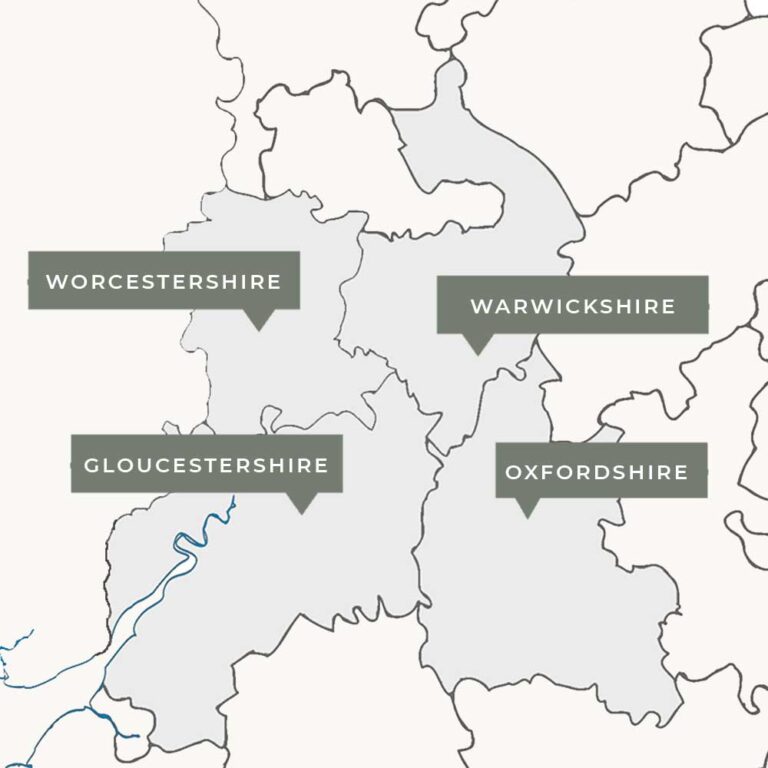
I provide notarial services throughout the North Cotswolds, Gloucestershire, Worcestershire, Warwickshire, and Oxfordshire. Travel costs are charged in addition to my legal fee and any disbursements.
Should you require notarial assistance or wish to talk through your documents, I would be pleased to arrange a meeting with you.